- Features
- Discover twelve inspiring women from Shrewsbury
Discover twelve inspiring women from Shrewsbury
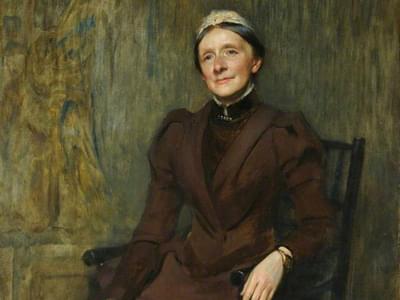

Dr Alice Bunn
Engineer and Scientist
Dr Alice Bunn attended Shrewsbury High School's 6th form, before studying metallurgy at the University of Leeds, and receiving her PhD from Cambridge. After a career in environmental research and observation, in 2011 Bunn joined the UK Space Agency and led the International Charter for Space and Major Disasters. The charter forces the international community to provide satellite imagery immediately after a disaster. She explored how satellite images can be used to save lives. In 2014, Bunn was appointed Director of Policy of the UK Space Agency. Bunn was one of 10 women to win Marie Claire’s Women At The Top Award in 2014, as she collected her award she said ‘In a room full of testosterone, you need a bit of estrogen’.
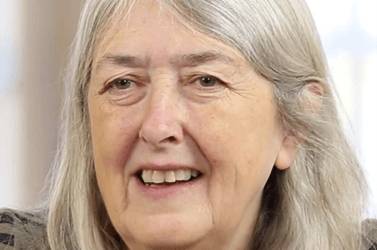
Dame Mary Beard
Classicist
Dame Mary Beard, DBE, FSA, FBA, FRSL, is an English scholar of Ancient Roman civilisation. Born in nearby Much Wenlock, she attended Shrewsbury High School. At the age of 18, Beard won a place at Newnham College, Cambridge. Whilst in her first year, she found that some of her male peers held dismissive attitudes regarding the academic potential of women, which only strengthened her determination to succeed and developed her views. Beard is a committed and vocal feminist and is the author of 'Women & Power: A Manifesto'. “You cannot easily fit women into a structure that is already coded as male; you have to change the structure”. Now, Beard is considered Britain's best-known classicist due to her frequent media appearances and is the classics editor of The Times' Literary Supplement.
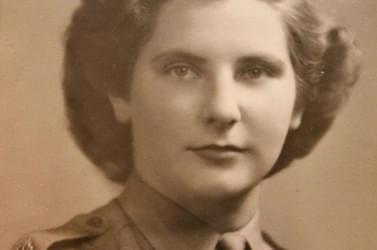
Betty Webb
Code Breaker
Born at nearby Aston-on-Clun, Webb was studying domestic science at Radbrook college, Shrewsbury, when World War II began. She joined the Auxilliary Territorial Service and, being fluent in German, was sent to the Government Code and Cypher School at Bletchley Park. Here she worked with Major Ralph Tester to register undeciphered Enigma messages, which she was later informed were communications between members of the SS and the Gestapo discussing the beginnings of the Holocaust. Webb saw out the war in the Pacific, at The Pentagon, before returning to England and working for the Territorial Army.

Margaret Agnes Rope
Stained Glass Artist
Margaret Agnes Rope was born in Shrewsbury in 1882, and from 1901 her family lived at The Priory, now Priory House on the Shrewsbury Colleges Group's Welsh Bridge campus. Her father was a surgeon at the Salop Infirmary, now The Parade Shops. She went on to design windows for more than sixty churches, as far afield as South Africa and Australia, and her work is now in the collection of the Metropolitan Museum in New York. Even after setting up a London studio in 1911, she kept coming home. Seven of her finest windows are in Shrewsbury Cathedral, a few hundred yards from the family house, and she worked out the designs for the cathedral's Great West Window on the Priory's kitchen table. In 1923 she entered an enclosed convent and never saw Shrewsbury again, though she carried on making glass inside its walls until the late 1930s. In 2018, Shrewsbury Civic Society unveiled a plaque to her on Priory House.

Edith Pargeter (Ellis Peters)
Novelist
Edith Pargeter was born in Horsehay in 1913, the daughter of a clerk at the local ironworks, and wrote some 70 books under several names. The one that stuck was Ellis Peters, borrowed from her brother Ellis and a friend's daughter, Petra. In 1977 she published A Morbid Taste for Bones, the first of the Cadfael Chronicles: medieval whodunnits solved by a Welsh Benedictine monk who tends the herb garden at Shrewsbury Abbey. Cadfael brought readers from around the world to the Abbey and the town, and the series is often credited with popularising the historical murder mystery. Pargeter / Peters was appointed OBE in 1994 and died the following year. In 1997, admirers paid for a new St Benedict window in Shrewsbury Abbey dedicated to her memory. Look closely and you'll find an open book, a quill and the name Cadfael. Her ashes were scattered in Shrewsbury, and in 1999 the Crime Writers' Association created an award for historical crime fiction in her name.

Katherine Harley
Suffragist and Wartime Nurse
Katherine Harley was born in Kent in 1855 but moved to Shropshire to live at Condover Grange, just south of Shrewsbury, when she married her husband in 1877. When she was widowed in 1907 she threw herself into the campaign for women's votes alongside her sister Charlotte. In 1913 she proposed that the National Union of Women's Suffrage Societies organise a march on London. Around 50,000 women took part in the pilgrimage. When war came in 1914 she turned her energy to the front, placing an appeal in the Wellington Journal for motor ambulances and then leading a 'Flying Column' that evacuated wounded soldiers in France. She went on to Serbia in charge of 40 British nurses and was awarded the Légion d'honneur for her work at the French hospital in Salonika. On 7 March 1917, after a morning handing out food to civilians in Monastir, she was killed by shrapnel from a shell. The Serbian Army raised her memorial. In Shrewsbury, there's a plaque to her at the Royal Shrewsbury Hospital, and her name is on the Stone of Remembrance at St Mary's.
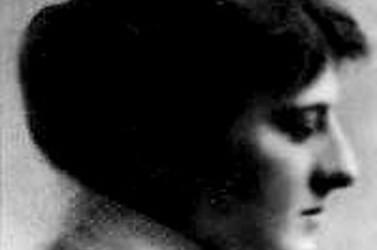
Mary Webb
Novelist and Poet
Romantic poet and novelist Mary Webb was born in 1881 in the nearby village of Leaton, before moving to Meole Brace on the outskirts of Shrewsbury at the age of 21. Webb's first published writing was a five-verse poem, written on hearing news of the Shrewsbury rail accident in October 1907. Her brother so liked the poem and thought it potentially comforting for those affected by the disaster that, without Webb's knowing, he took it to the newspaper offices of the Shrewsbury Chronicle, which printed the poem anonymously. Mary, who usually burnt her early poems, was appalled before learning that the newspaper had received appreciative letters from its readers. Heavily inspired by the surrounding Shropshire countryside, Webb's writings received little recognition during her lifetime, although her most famous novel Precious Bane saw her awarded the Prix Femina Vie Heureuse. Posthumously, Webb's works became best-sellers thanks in part to Prime Minister Stanley Baldwin naming her "a neglected genius". A bust of Mary Webb can be seen in the gardens beside Shrewsbury Library.
Barbara Wylie
Suffragette
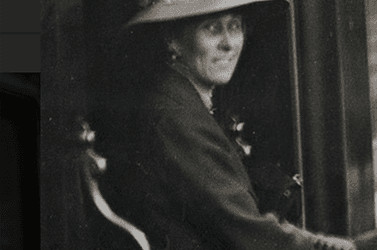
Barbara Wylie was born in Shrewsbury in 1861 and became a prominent figure within the women's rights movement. Wylie joined the Glasgow branch of the Women's Social and Political Union, which was later labeled as suffragettes. She was very much a part of the militant actions and engaged in many social settings where she gave speeches and rallied marches, and her house was safe haven for those in the movement. Wylie was a close friend and ally with Emmeline Pankhurst, and supported her many times throughout her involvement with the movement. On 22 May 1914, when acting as a bodyguard to protect Pankhurst from being arrested at St. Andrew's Hall, Glasgow, Wylie was hurt and ultimately arrested. When Pankhurst passed away in 1928, Wylie was one of her pallbearers. In 1913, Calgary, Alberta, Wylie gave a speech which became the one she was known for; “Abandon ladylike constitutional methods. Don’t be docile, don’t be ladylike. Don’t dread being conspicuous. Now is the time for deeds, not words".

Marion Kennedy
Scholar
Marion Kennedy was the second child of Janet and Benjamin Hall Kennedy, headmaster of Shrewsbury School. Born too early to take advantage of women's higher education, Kennedy was educated at home. The family moved to Cambridge in 1867, where Kennedy became involved in reforming liberal views. The improvements in women's rights were strongly supported by the family, and early students to the newly opened Cambridge Women's Colleges took their exams at the family's home. Kennedy herself generously financed and was executive secretary of the Association for Promoting the Higher Education of Women in Cambridge which became part of Newnham College, where Mary Beard would later attend. She argued for a change to the college's institution to ensure the students had real power over the future direction of the college, which remains in place to this day.

Elizabeth Prout
Educator and Founder
Elizabeth Prout was born in Coleham on 2 September 1820 and baptised at St Julian's Church. Her father was a cooper, making casks for the Coleham Brewery, and when it closed the family lost their income and left Shrewsbury. Elizabeth was eleven. Raised Anglican, she became a Catholic in her twenties and went to work among the families of industrial Manchester. In 1852 she founded a community of sisters there, which later became the Sisters of the Cross and Passion. They opened day and night schools for the industrial poor and refuges for factory girls, often living as poor as the people they served; at times Elizabeth had to beg. She managed all of this while living with a disability caused by illness, and died in St Helens in 1864, aged just 43. In 2021 Pope Francis declared her Venerable, one step from beatification on the road to sainthood.

Æthelflæd
Lady of the Mercians
Æthelflæd was the eldest child of Alfred the Great, married to Æthelred of Mercia to seal an alliance against the Vikings. When illness forced Æthelred out of public life in 902, she took charge of Mercia, ruling outright after his death in 911. She was a warrior ruler in the full sense: she led campaigns in the East Midlands, fortified a string of Mercian towns, captured the Viking stronghold of Derby in 917 and, by 918, had York ready to pay her homage. Tradition credits her with founding St Alkmund's Church in Shrewsbury and giving it land to support it. Legend has it that she preferred building churches to forts, reasoning that the enemy was less likely to burn them. She died at Tamworth in 918, just before she was due to visit York. Her nephew Athelstan, who is thought to have learned statecraft and soldiering at her court, went on to become the first King of the English.
SPECIAL MENTION

The Nurses of Cross Houses
Windrush Generation Nurses
In the 1960s, young women from the Caribbean crossed the Atlantic to train as nurses for the NHS as part of the historic Windrush Generation. Cross Houses Hospital, just outside Shrewsbury, was one of the key places they were stationed.
Marjorie Brown was 17 when she left her parents and nine brothers and sisters in Trinidad and Tobago in 1965. She planned to stay five years, but met her husband, and ended up giving the NHS 50 years before she eventually retired.
Nazerone "Neddie" Howells followed in March 1966, aged 22. She spent two weeks at sea before travelling to Cross Houses, chosen because an aunt was already nursing there. Training was strict: matron and the ward sisters ruled, and students had to be back by 10pm, even after a night out. Neddie qualified as a State Enrolled Nurse, later converted to State Registered Nurse, and spent more than 40 years at the Royal Shrewsbury Hospital and the Robert Jones and Agnes Hunt Memorial Hospita. She remembers that Shrewsbury won her over early; it was small, surrounded by countryside, and looked like a good place to bring up a family.

Join our newsletter
Sign up to our Original Shrewsbury newsletter to be first in the know about upcoming events, offers and promotions. We'll also send you handy guides to help you make the most of what our beautiful town has to offer.